
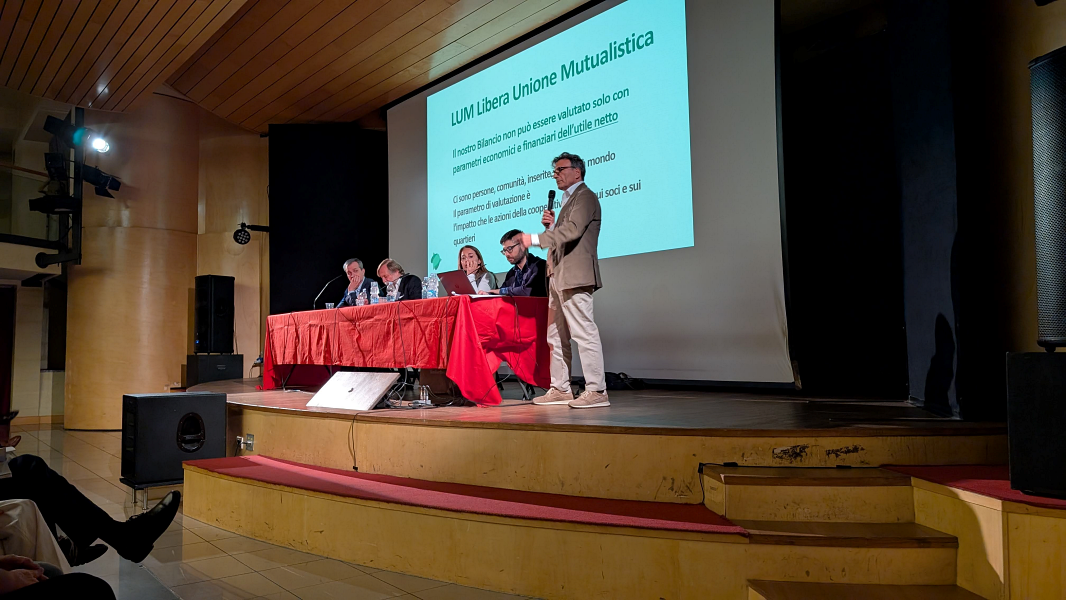

Libera Unione Mutualistica (LUM) represents the accumulated heritage of Milanese housing cooperatives founded in working-class districts during the city's industrial expansion. Their defining choice was undivided ownership: homes were held as a common asset rather than progressively converted into individual speculative property. Over decades, mergers strengthened the capacity to maintain historic buildings, develop new affordable housing and retain a mutualist approach in a city where housing costs have become increasingly difficult for ordinary households.
The tangible legacy includes residential architecture from different periods, but the deeper heritage lies in the social ecosystem built around it - member participation, community spaces, mutual investment and services that treated housing as a basis for collective well-being. LUM therefore shows how a cooperative heritage can remain materially useful. Historic buildings are not preserved as isolated relics; they continue to house people under a model intended to transfer affordability and community value from one generation to the next.
LUM's undivided-ownership model gives the peace connection particular force. By keeping homes within a common patrimony, the cooperative seeks to protect affordability across generations rather than allowing the entire value of historic housing to be captured through individual sale. The model is reinforced by member participation, mutual investment and neighbourhood services.
Housing insecurity can create profound social tension, especially in high-cost cities; long-term cooperative stewardship offers one way of reducing that pressure. LUM therefore demonstrates positive peace through economic architecture: rules governing property are designed to balance individual use with intergenerational responsibility. The heritage is peaceful not because residents always agree, but because conflict over a scarce urban resource is channelled through democratic governance and a shared commitment to preserve access for future members.
Featured Criteria
Criterion 5. Living Practice of Cooperation
Sites shall embody cooperation as a living tradition, encouraging participation, democratic practice, and mutual aid, beyond static commemoration.
Criterion 8. Community and Member Engagement
Sites shall be embedded within their communities, ensuring active participation, ownership, and collective stewardship by local members and residents.
Criterion 12. Sustainability and Inclusivity
Sites shall embody cooperative values of social and environmental sustainability, including, gender equity, youth engagement, and cultural diversity.
Learn More