
List of Cooperative Cultural Heritages
Explore the cooperative traditions, practices, and knowledge recognized worldwide
Physical places, buildings, settlements, and infrastructure that embody the history and legacy of cooperative enterprise. These include cooperative stores, factories, housing complexes, agricultural facilities, and landscapes directly associated with cooperative activity. Tangible CCH represents the material foundations of cooperation, visible in the built environment and cultural landscapes shaped by cooperative governance.
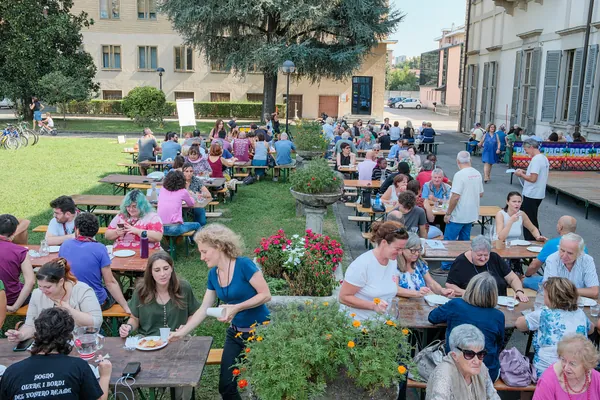

UniAbita Soc. Coop
UniAbita brings together more than a century of cooperative housing experience in the municipalities north of Milan. Its lineage includes La Previdente, founded in Cinisello Balsamo in 1903, Aurora in 1906 and later post-war housing initiatives; successive mergers eventually created UniAbita in 2010. The historical significance of this trajectory lies in the way workers and families used collective organisation to address housing needs during periods of industrial growth, reconstruction and urban expansion. Today the cooperative's large membership sustains neighbourhood networks, social and cultural initiatives and partnerships with local associations and public authorities. The long history of UniAbita's predecessor societies also shows why cooperative housing can matter for social peace. Early worker cooperatives responded to urbanisation by organising access to homes and neighbourhood life; contemporary UniAbita continues through community programmes, local partnerships and resident networks. The value lies not simply in surviving buildings but in the continuity of relationships around them. Stable housing, participation and local social services help reduce isolation and insecurity, while neighbourhood associations create spaces in which residents can address common problems collectively.
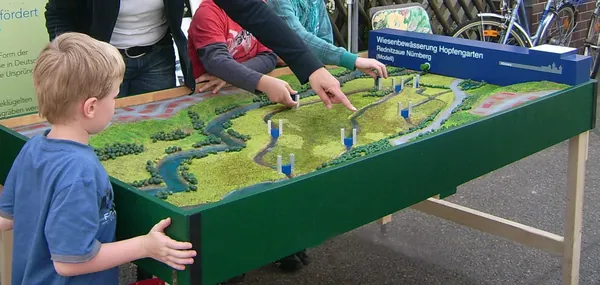
Traditional irrigation: knowledge, technique and organization
Traditional irrigation is a living body of knowledge, technique and social organisation built around the gravity-fed distribution of water through channels and ditches. Practitioners read landscape, water flow, weather and seasonal conditions; they choose watering periods, divert flows manually and maintain physical structures whose functioning depends on coordinated labour. The beginning or end of the watering season is often accompanied by social gatherings and local customs that reinforce the system’s place in community identity. The official inscription text explicitly describes the institutional role of cooperation. It states that traditional irrigation requires close cooperation between farmers and landowners responsible for water distribution and the people who maintain the infrastructure, including water cooperatives and local authorities. It further notes that cooperatives and associations, alongside scholars and institutions, play an important role in transmitting the knowledge to younger generations. This language is especially important for cooperative cultural heritage because it locates cooperation inside the functioning and transmission of the practice itself. The heritage therefore resides in more than channels. It lies in the rules, labour, trust and organisations through which users govern interdependence. No single farmer can maintain the whole system or secure a reliable flow without others observing shared arrangements. Traditional irrigation is consequently a powerful example of common-resource governance: scarcity is managed through predictable duties and collective stewardship rather than unilateral appropriation. These arrangements also have a peace dimension. By making access, maintenance and responsibility legible to all participants, the system creates institutions through which competing needs can be negotiated and water can remain a shared resource rather than a recurring source of conflict.
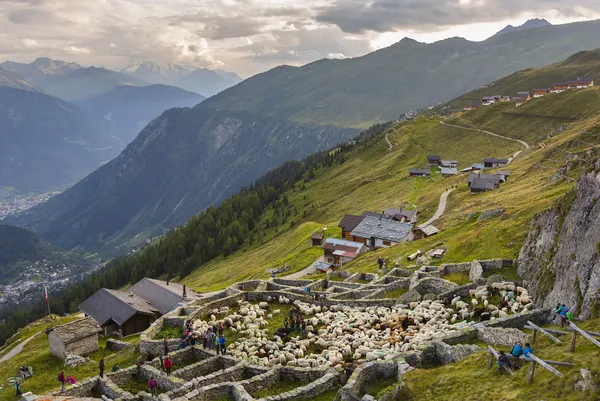
Alpine pasture season
Switzerland’s alpine pasture season is the annual movement of cattle, sheep and goats to high-altitude pastures, together with the knowledge, skills and social practices required to maintain that seasonal economy. Alpine farmers care for animals, repair fences and buildings, manage pastures, process milk into cheese and other products, and welcome visitors. The practice has also generated rituals, festivities, specialist clothing and local forms of social exchange. The official inscription text explicitly identifies alpine societies and cooperatives as bearers and transmitters of this knowledge. It states that farming and cheesemaking skills are often passed on informally within families and seasonal workforces, but also among members of alpine societies and cooperatives. The inscription decision likewise includes cooperatives among the communities and organisations that sustain the element and notes their role in education and transmission. The cooperative connection is therefore not an analogy imposed from outside; it is part of the institutional ecology of the practice. This matters because alpine grazing is inherently interdependent. Access to high pastures, maintenance of routes and buildings, animal care, milk processing and landscape management all require rules and reciprocal obligations that extend beyond a single household. Cooperative and associative structures help organise those responsibilities and keep knowledge connected to viable livelihoods. The alpine pasture season thus demonstrates how collective organisation can sustain fragile mountain environments and intergenerational continuity at the same time. The element’s relevance to peace is found in everyday reciprocity: shared resource use works only when participants accept legitimate rules, respect one another’s obligations and preserve a social relationship strong enough to manage common landscapes together.
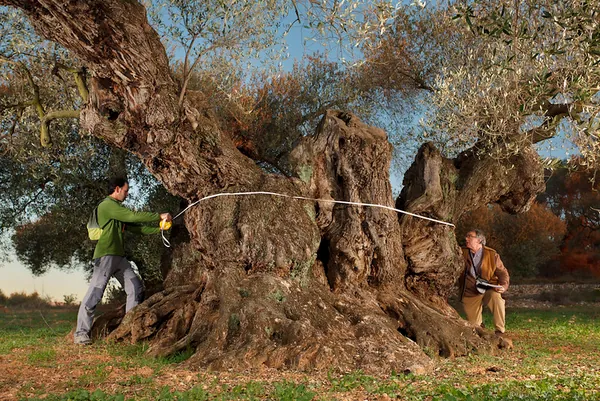
Territorio Sénia ancient olive trees
The Agricultural System Ancient Olive Trees Territorio Sénia spans a cross-regional landscape of eastern Spain characterised by an exceptional concentration of ancient olive trees, locally adapted varieties and inherited knowledge of pruning, grafting, harvesting and oil production. The system links productive agriculture with landscape stewardship, gastronomy, rural identity and the recovery of trees that might otherwise be abandoned. The official agricultural-heritage record identifies cooperation as a defining institutional feature. It describes a strong tradition of partnership through cooperatives that mill the olives of hundreds of members. It also highlights collaboration between different cooperatives and olive-oil producers which, although they compete commercially, work together to safeguard the ancient-olive-tree project, operate the Aceite Farga Milenaria guarantee mark and follow common regulations and good practices. This is a particularly clear example of cooperation functioning as a heritage-safeguarding infrastructure. The cultural value of Territorio Sénia therefore lies not only in the age of the trees. It lies in the capacity of farmers, mills, municipalities, associations, restaurants, tourism actors and local communities to coordinate around a landscape whose value exceeds any single property. Cooperative milling provides an economic basis for continued cultivation, while inter-cooperative collaboration makes shared standards and collective branding possible. The heritage is thus simultaneously biological, cultural and institutional: ancient trees remain alive and productive because a network of people continues to organise their care and use. The system demonstrates how cooperation can preserve diversity in ownership while creating the scale required to protect landscape, knowledge and rural livelihoods over generations.

Culture of Jeju Haenyeo (women divers)
The culture of Jeju Haenyeo centres on women free-divers who harvest marine products without breathing equipment and whose knowledge of tides, weather, marine ecology, diving safety and seasonal conditions is transmitted across generations. Divers are organised by levels of experience, with senior practitioners guiding others, and the practice forms a major part of Jeju’s cultural identity. It has also contributed to the advancement of women’s social status and is associated with environmentally attentive harvesting practices. The official inscription record places cooperatives squarely within the heritage system. It states that knowledge is transmitted through families, schools, haenyeo associations, the Haenyeo School, the Haenyeo Museum and local fishery cooperatives that hold the area’s fishing rights. The inscription decision goes further: representatives of the diving cooperatives were identified as participants in safeguarding, and the chairs of all village fishery cooperatives in Jeju Province gave their consent to the nomination. Cooperative institutions therefore help connect cultural transmission with access to the marine resource on which the practice depends. This is a particularly strong example of cooperative cultural heritage because the cooperative dimension is not merely commercial. Fishery cooperatives participate in the governance of fishing rights, while haenyeo communities transmit practical knowledge and uphold shared norms around resource use. The result is a heritage system in which livelihood, gendered knowledge, ecological stewardship and collective management are inseparable. Its continuity depends on maintaining both embodied expertise and institutions capable of governing the sea as a shared and finite resource. In that sense, cooperation helps sustain not only an occupation but a social order built around mutual dependence, responsibility and respect for ecological limits.
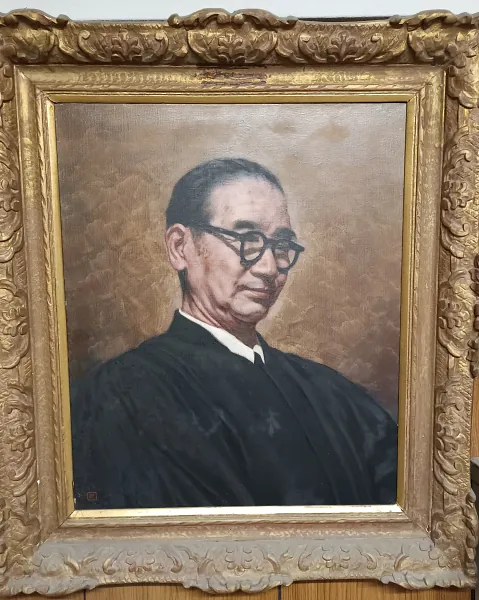
General Incorporation Foundation Honjo Kagawa Memorial Center
The Honjo Kagawa Memorial Center in Tokyo stands within the area where Toyohiko Kagawa undertook relief and settlement work after the Great Kanto Earthquake of 1923. Around that work developed a network of social initiatives including a clinic, childcare, adult learning and cooperative institutions such as the Koto Consumers' Union and the Nakanogo Pawn Co-operative. Much of the original physical environment was destroyed in the 1945 air raids, and the present Center dates from 1969. Its heritage is therefore carried less by architectural continuity than by continuity of purpose. Community welfare and children's programmes remain central, while regular reading groups and study sessions transmit Kagawa's ideas to staff, local participants and related organisations. The site is significant as an example of 'spiritual' or institutional safeguarding: a place rebuilt after destruction has maintained the social-service and educational ethos associated with the cooperative and settlement movements that preceded it. The Honjo site is directly connected with Kagawa's relief work after the Great Kanto Earthquake of 1923 and the settlement activities that followed. Institutions established in that environment included welfare, educational and cooperative initiatives, while the current Center, rebuilt in 1969 after wartime destruction, continues community and children's services. The site emanates neighbourly love, service to community and commitment to peace as part of the guiding philosophy transmitted through study groups and organisational practice. Here the peace connection should therefore be explicit. The site's heritage lies in rebuilding social infrastructure after catastrophe: care, education, credit and community organisation were treated as mutually reinforcing. It demonstrates a conception of peace in which reconstruction means more than restoring buildings - it means restoring relationships, services and human dignity.
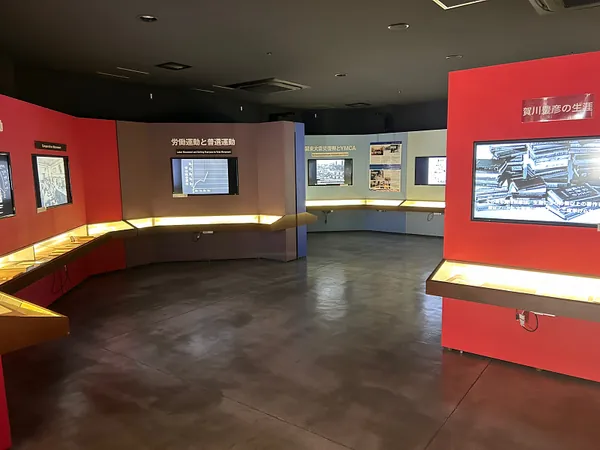
Kagawa Memorial Center
The Kagawa Memorial Center in Kobe occupies the area where Toyohiko Kagawa began the social work that would shape his later engagement with cooperation, welfare and peace. A memorial centre was first constructed there in 1963; the current building was completed in 2010 as part of the centenary commemorations of Kagawa's early work in Kobe. The complex deliberately combines interpretation with service. Exhibitions and audiovisual material on Kagawa share the building with a church, childcare and education facilities, a clinic and a cafe whose name recalls an earlier dining initiative associated with his settlement work. Volunteers and cooperative members contribute to interpretation, and the Center is used for learning by visitors from Japan and abroad. Its significance lies in this coexistence of memory and social function: historical interpretation is embedded within institutions that continue to address community needs rather than being isolated in a stand-alone memorial. The Kobe Kagawa Memorial Center stands in the area where Kagawa began social activity among poor communities. The current building, completed in 2010, combines exhibitions with a church, childcare and education facilities, a clinic and a cafe, preserving the settlement-house idea as an active social environment rather than a closed museum. Cooperative members and local residents participate as volunteers and storytellers, while the Center is used for human-rights education and receives visitors from abroad. Its relevance to peace lies in this integration of memory and service. Poverty, exclusion and discrimination are treated not as abstract historical subjects but as continuing social questions requiring care, education and organised solidarity. The Center therefore embodies a peace ethic in which community welfare, human rights and cooperation are practical obligations.
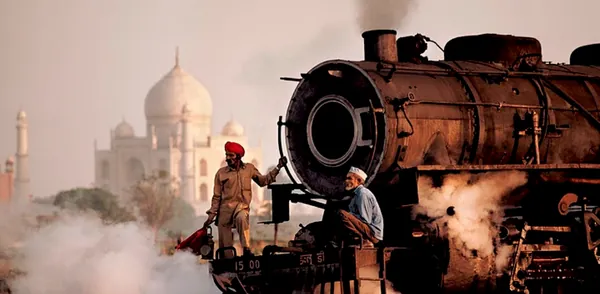
The Central Railway Employees' Co-operative Credit Society Ltd.
Founded in 1913, the Central Railway Employees' Co-operative Credit Society is a long-established employees financial cooperative serving railway workers across a wide geographic area. Approximately 120,000 members are associates in a structure where employees from different grades participate as members with equal cooperative rights. Its continuing significance lies principally in the survival of an active member-owned credit institution through major changes in India's railway system, financial regulation and workplace conditions. The Society promotes saving, provides credit and supports member welfare, while periodic elections maintain a democratic governance mechanism. The Society's longevity across railway regions gives it an important social function even though its formal 2026 criteria assessment is unusually narrow. Membership spans employees of different grades, while periodic elections and equal cooperative rights provide a common institutional identity across a very large workforce. The peace angle here is that the workplace mutual finance can strengthen solidarity by providing employees with a collectively governed mechanism for saving, borrowing and welfare. Such institutions can reduce vulnerability to informal debt and create cross-grade relationships based on membership rather than hierarchy.
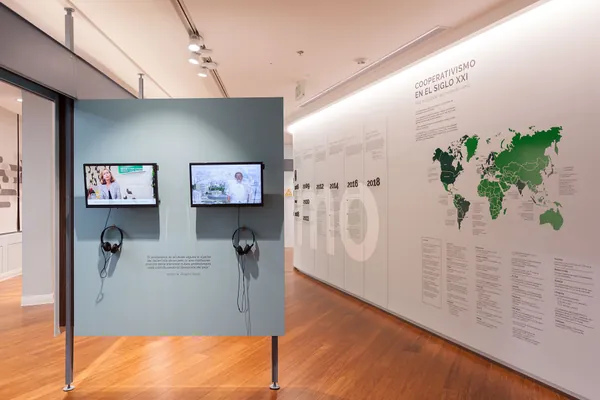
Centro del Pensamiento Coomeva
The Centro del Pensamiento Coomeva in Cali is conceived as both a physical and digital environment for preserving and interpreting cooperative memory. Its exhibition route situates Coomeva's history within the wider development of Colombian and international cooperation, using timelines, symbols, audiovisual material and thematic rooms devoted to founders, institutional evolution, enterprise structure and the role of members. The physical centre is complemented by a virtual documentation repository containing more than 2,600 items on cooperation and the solidarity economy, widening access beyond the museum space. The importance of the initiative lies in the deliberate conversion of institutional memory into a public learning resource. Rather than presenting history solely as corporate commemoration, it gathers documents and interpretation into an infrastructure for research, member education and reflection on cooperative identity. The combination of museography, digital access and documentary preservation makes the Center particularly strong in education, knowledge sharing and safeguarding. Coomeva's Center also offers a useful peace lens because museums of institutional memory can become spaces for civic education rather than corporate celebration. Its timelines and thematic rooms place principles such as democracy, solidarity and mutual aid within historical context, while the open digital repository gives researchers and the public access to a broader documentary base. Cooperative peace is built partly through the ability of members to understand the institutions they govern - their rights, history, symbols and responsibilities. By making those materials visible, the Center can strengthen informed participation and reduce the distance between large cooperative organisations and their members. Its contribution is therefore educational: a culture of peace depends on memory, transparency and the capacity to discuss institutional choices with reference to shared values and evidence.
Libera Unione Mutualistica Società Cooperativa
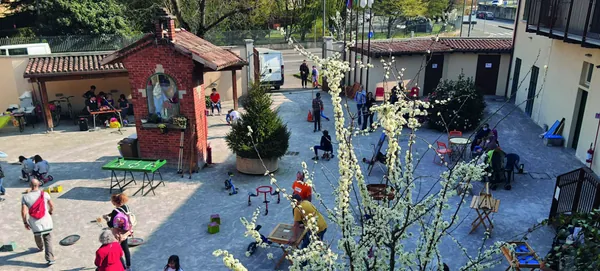
Libera Unione Mutualistica (LUM) represents the accumulated heritage of Milanese housing cooperatives founded in working-class districts during the city's industrial expansion. Their defining choice was undivided ownership: homes were held as a common asset rather than progressively converted into individual speculative property. Over decades, mergers strengthened the capacity to maintain historic buildings, develop new affordable housing and retain a mutualist approach in a city where housing costs have become increasingly difficult for ordinary households. The tangible legacy includes residential architecture from different periods, but the deeper heritage lies in the social ecosystem built around it - member participation, community spaces, mutual investment and services that treated housing as a basis for collective well-being. LUM therefore shows how a cooperative heritage can remain materially useful. Historic buildings are not preserved as isolated relics; they continue to house people under a model intended to transfer affordability and community value from one generation to the next. LUM's undivided-ownership model gives the peace connection particular force. By keeping homes within a common patrimony, the cooperative seeks to protect affordability across generations rather than allowing the entire value of historic housing to be captured through individual sale. The model is reinforced by member participation, mutual investment and neighbourhood services. Housing insecurity can create profound social tension, especially in high-cost cities; long-term cooperative stewardship offers one way of reducing that pressure. LUM therefore demonstrates positive peace through economic architecture: rules governing property are designed to balance individual use with intergenerational responsibility. The heritage is peaceful not because residents always agree, but because conflict over a scarce urban resource is channelled through democratic governance and a shared commitment to preserve access for future members.