
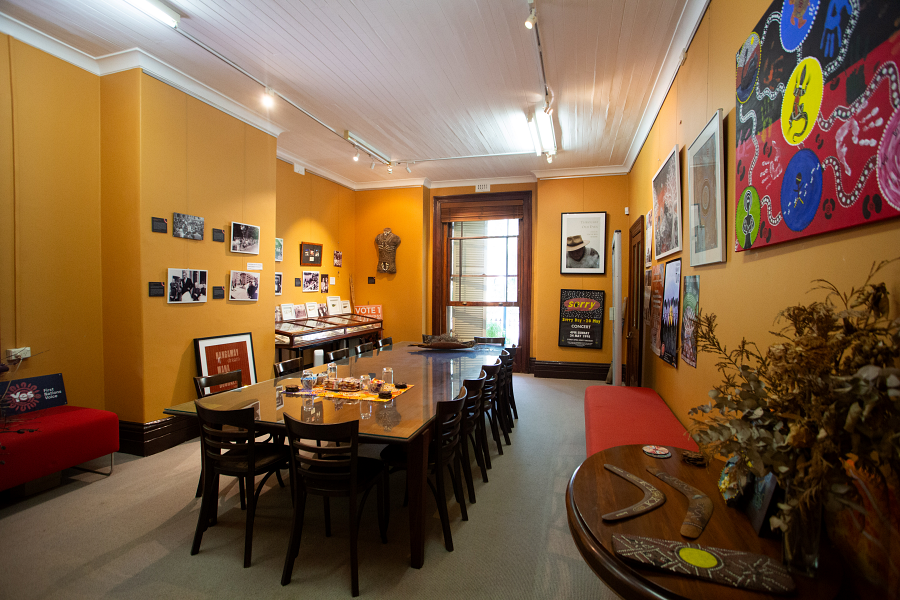

Tranby, established in Glebe in 1957, is an Indigenous-controlled cooperative institution in which adult education, collective organisation and self-determination have been closely connected for nearly seven decades. Its early programme combined vocational training with cooperative principles so that Aboriginal students could carry skills and organisational capacity back to their own communities. Under Indigenous leadership, Tranby subsequently became a significant meeting place for education, social-justice organising and community development. The heritage value of the campus is formally recognised in New South Wales, but the site's significance extends beyond its buildings.
Archives, oral histories, community knowledge, the Rona Tranby Trust and more recent work on Indigenous-controlled digital preservation safeguard records under Indigenous authority. Education remains the principal mechanism of transmission. Tranby's importance therefore rests on continuity of agency: successive generations have used a cooperative institution not simply to receive training, but to create and govern knowledge on terms shaped by Aboriginal communities themselves.
Tranby's heritage is also safeguarded through archives, oral histories and newer initiatives such as the Digital Dilly Bag, which aims to keep Indigenous audiovisual stories and cultural knowledge under Indigenous custodianship. Its campus was listed on the New South Wales State Heritage Register in 1999, recognising its exceptional social significance.
The connection to peace is substantial because self-determination, cultural recognition and access to education are dimensions of justice on which durable peace depends. Tranby's history includes support for campaigns for Aboriginal rights and the creation of spaces where Elders, students and community organisations could meet on their own terms. The site therefore speaks to peace not as assimilation, but as the capacity of Indigenous peoples to maintain identity, govern knowledge and participate in public life with dignity and agency.
Featured Criteria
Criterion 4. Active Cooperative Connection
Sites must either remain in operation as cooperatives or be explicitly dedicated to preserving and interpreting cooperative history.
Criterion 6. Educational Mission
Sites shall actively promote cooperative literacy through exhibitions, archives, guided tours, and programmes that teach the ICA Statement on the Cooperative Identity.
Criterion 8. Community and Member Engagement
Sites shall be embedded within their communities, ensuring active participation, ownership, and collective stewardship by local members and residents.
Learn More