
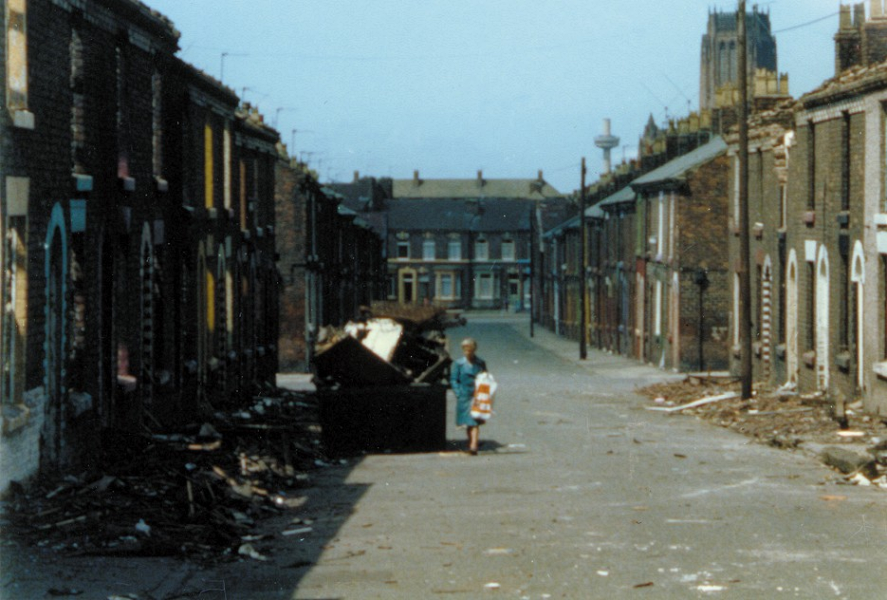

Weller Streets Housing Co-operative in Liverpool was formed in 1977 by residents living in poor housing conditions who sought to prevent the dispersal of their community. The new development, completed in 1982, grew from an intensive participatory design process involving around seventy members. The resulting neighbourhood comprised 67 homes arranged around landscaped spaces intended to support safety, sociability and everyday community life.
The project is important because participation shaped both governance and architecture. Residents were not asked merely to comment on a professional design; they were involved in defining the homes and environment they would collectively inhabit. The cooperative adopted a par-value structure intended to keep the housing focused on social need rather than capital gain. Its ideas were documented and circulated as “The Weller Way”, helping influence other housing-cooperative initiatives in Merseyside.
Weller Streets is a particularly legible example of democratic design. The built form expresses principles of equality, utility and community support, while the cooperative structure provides continuity through resident management and maintenance. It shows how heritage can arise from a process: the lasting value is not only the distinctive estate but the method by which a community converted housing insecurity into collective ownership and participatory planning.
COOPERATION AND PEACE
Weller Streets offers a concrete link between housing and peace. The original community faced the prospect of dispersal; cooperative organisation preserved social networks while giving residents agency over reconstruction. Participatory design required people to negotiate competing needs and translate them into shared space. The resulting neighbourhood demonstrates how secure housing, democratic participation and a supportive physical environment can reduce social fragmentation.
Featured Criteria
Criterion 4. Active Cooperative Connection
Sites must either remain in operation as cooperatives or be explicitly dedicated to preserving and interpreting cooperative history.
Criterion 5. Living Practice of Cooperation
Sites shall embody cooperation as a living tradition, encouraging participation, democratic practice, and mutual aid, beyond static commemoration.
Criterion 12. Sustainability and Inclusivity
Sites shall embody cooperative values of social and environmental sustainability, including, gender equity, youth engagement, and cultural diversity.
Learn More