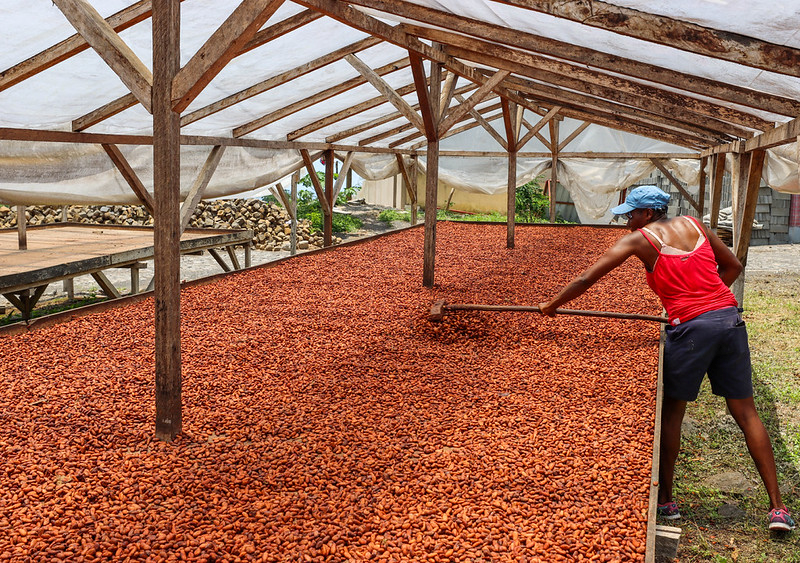

São Tomé and Príncipe’s cocoa agroforestry system carries a complex historical inheritance. Cocoa production was established within a colonial plantation economy marked by enslavement, coercive labour and profound inequality. The contemporary agroforestry landscape, however, is increasingly characterised by smallholder production, diversified shade systems and efforts to place greater value and decision-making power in the hands of farming communities.
The system combines cocoa - including the locally important Amelonado genetic resource - with bananas, breadfruit, taro, fruit trees, medicinal plants and shade trees arranged in several vegetation layers. This structure resembles a forest more closely than a monoculture plantation. It supports biodiversity, protects soil and water, diversifies household food and income, and gives farmers greater resilience to price and climate shocks. The agricultural knowledge embedded in the system concerns not only cocoa cultivation but also the management of shade, soils, associated crops and ecological relationships.
Its cooperative relevance is unusually strong because the recent history of the sector includes a movement toward cooperativism and fairer trading relationships. Collective organisation enables farmers to aggregate production, improve quality, gain market access and retain a greater share of value. The heritage significance therefore lies partly in a social transformation: a crop once inseparable from domination is being reworked through institutions intended to support farmer agency, social equity and community continuity.
COOPERATION AND PEACE
This is one of the clearest entries in which heritage and peace intersect through historical repair. Cooperative organisation cannot erase the violence of the plantation past, but it can redistribute voice, income and bargaining power. By strengthening farmer autonomy and social cohesion, the contemporary system contributes to positive peace: addressing structural inequality and replacing extractive relationships with forms of participation, mutual support and more equitable exchange.
Photos credit: ©FAO/Ody Mpouo
Featured Criteria
Criterion 8. Community and Member Engagement
Sites shall be embedded within their communities, ensuring active participation, ownership, and collective stewardship by local members and residents.
Criterion 12. Sustainability and Inclusivity
Sites shall embody cooperative values of social and environmental sustainability, including, gender equity, youth engagement, and cultural diversity.
Criterion 13. Networking and International Solidarity
Sites shall connect to cooperative networks—regional, national, and international—participating in exchanges, research, and cooperative tourism to strengthen global cooperative heritage.
Learn More