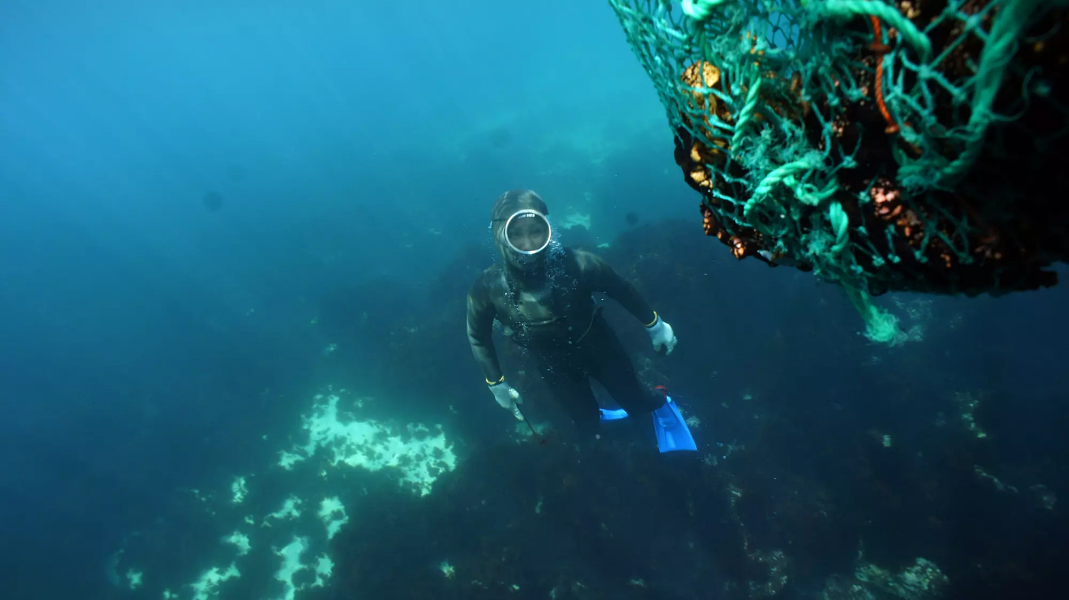

The culture of Jeju Haenyeo centres on women free-divers who harvest marine products without breathing equipment and whose knowledge of tides, weather, marine ecology, diving safety and seasonal conditions is transmitted across generations. Divers are organised by levels of experience, with senior practitioners guiding others, and the practice forms a major part of Jeju’s cultural identity. It has also contributed to the advancement of women’s social status and is associated with environmentally attentive harvesting practices.
The official inscription record places cooperatives squarely within the heritage system. It states that knowledge is transmitted through families, schools, haenyeo associations, the Haenyeo School, the Haenyeo Museum and local fishery cooperatives that hold the area’s fishing rights. The inscription decision goes further: representatives of the diving cooperatives were identified as participants in safeguarding, and the chairs of all village fishery cooperatives in Jeju Province gave their consent to the nomination. Cooperative institutions therefore help connect cultural transmission with access to the marine resource on which the practice depends.
This is a particularly strong example of cooperative cultural heritage because the cooperative dimension is not merely commercial. Fishery cooperatives participate in the governance of fishing rights, while haenyeo communities transmit practical knowledge and uphold shared norms around resource use.
The result is a heritage system in which livelihood, gendered knowledge, ecological stewardship and collective management are inseparable. Its continuity depends on maintaining both embodied expertise and institutions capable of governing the sea as a shared and finite resource. In that sense, cooperation helps sustain not only an occupation but a social order built around mutual dependence, responsibility and respect for ecological limits.
Featured Criteria
Criterion 4. Active Cooperative Connection
Sites must either remain in operation as cooperatives or be explicitly dedicated to preserving and interpreting cooperative history.
Criterion 5. Living Practice of Cooperation
Sites shall embody cooperation as a living tradition, encouraging participation, democratic practice, and mutual aid, beyond static commemoration.
Criterion 6. Educational Mission
Sites shall actively promote cooperative literacy through exhibitions, archives, guided tours, and programmes that teach the ICA Statement on the Cooperative Identity.
Learn More