
List of Cooperative Cultural Heritages
Explore the cooperative traditions, practices, and knowledge recognized worldwide
Physical places, buildings, settlements, and infrastructure that embody the history and legacy of cooperative enterprise. These include cooperative stores, factories, housing complexes, agricultural facilities, and landscapes directly associated with cooperative activity. Tangible CCH represents the material foundations of cooperation, visible in the built environment and cultural landscapes shaped by cooperative governance.
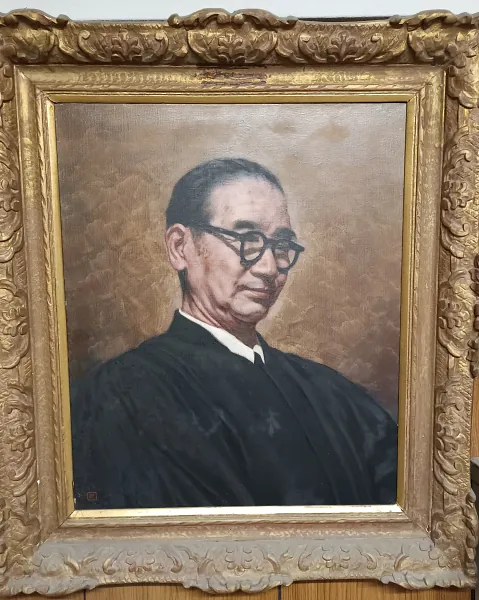

General Incorporation Foundation Honjo Kagawa Memorial Center
The Honjo Kagawa Memorial Center in Tokyo stands within the area where Toyohiko Kagawa undertook relief and settlement work after the Great Kanto Earthquake of 1923. Around that work developed a network of social initiatives including a clinic, childcare, adult learning and cooperative institutions such as the Koto Consumers' Union and the Nakanogo Pawn Co-operative. Much of the original physical environment was destroyed in the 1945 air raids, and the present Center dates from 1969. Its heritage is therefore carried less by architectural continuity than by continuity of purpose. Community welfare and children's programmes remain central, while regular reading groups and study sessions transmit Kagawa's ideas to staff, local participants and related organisations. The site is significant as an example of 'spiritual' or institutional safeguarding: a place rebuilt after destruction has maintained the social-service and educational ethos associated with the cooperative and settlement movements that preceded it. The Honjo site is directly connected with Kagawa's relief work after the Great Kanto Earthquake of 1923 and the settlement activities that followed. Institutions established in that environment included welfare, educational and cooperative initiatives, while the current Center, rebuilt in 1969 after wartime destruction, continues community and children's services. The site emanates neighbourly love, service to community and commitment to peace as part of the guiding philosophy transmitted through study groups and organisational practice. Here the peace connection should therefore be explicit. The site's heritage lies in rebuilding social infrastructure after catastrophe: care, education, credit and community organisation were treated as mutually reinforcing. It demonstrates a conception of peace in which reconstruction means more than restoring buildings - it means restoring relationships, services and human dignity.
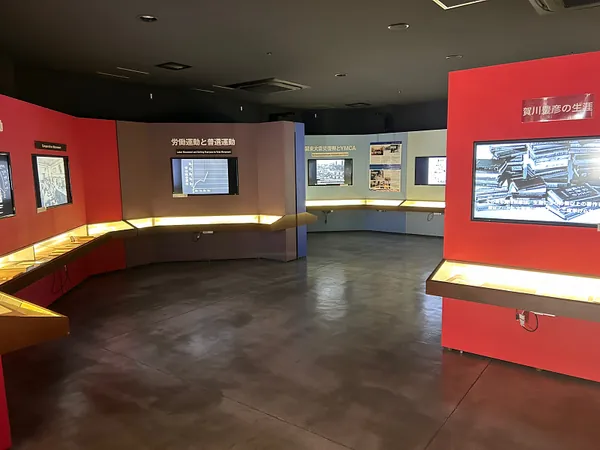
Kagawa Memorial Center
The Kagawa Memorial Center in Kobe occupies the area where Toyohiko Kagawa began the social work that would shape his later engagement with cooperation, welfare and peace. A memorial centre was first constructed there in 1963; the current building was completed in 2010 as part of the centenary commemorations of Kagawa's early work in Kobe. The complex deliberately combines interpretation with service. Exhibitions and audiovisual material on Kagawa share the building with a church, childcare and education facilities, a clinic and a cafe whose name recalls an earlier dining initiative associated with his settlement work. Volunteers and cooperative members contribute to interpretation, and the Center is used for learning by visitors from Japan and abroad. Its significance lies in this coexistence of memory and social function: historical interpretation is embedded within institutions that continue to address community needs rather than being isolated in a stand-alone memorial. The Kobe Kagawa Memorial Center stands in the area where Kagawa began social activity among poor communities. The current building, completed in 2010, combines exhibitions with a church, childcare and education facilities, a clinic and a cafe, preserving the settlement-house idea as an active social environment rather than a closed museum. Cooperative members and local residents participate as volunteers and storytellers, while the Center is used for human-rights education and receives visitors from abroad. Its relevance to peace lies in this integration of memory and service. Poverty, exclusion and discrimination are treated not as abstract historical subjects but as continuing social questions requiring care, education and organised solidarity. The Center therefore embodies a peace ethic in which community welfare, human rights and cooperation are practical obligations.

The Central Railway Employees' Co-operative Credit Society Ltd.
Founded in 1913, the Central Railway Employees' Co-operative Credit Society is a long-established employees financial cooperative serving railway workers across a wide geographic area. Approximately 120,000 members are associates in a structure where employees from different grades participate as members with equal cooperative rights. Its continuing significance lies principally in the survival of an active member-owned credit institution through major changes in India's railway system, financial regulation and workplace conditions. The Society promotes saving, provides credit and supports member welfare, while periodic elections maintain a democratic governance mechanism. The Society's longevity across railway regions gives it an important social function even though its formal 2026 criteria assessment is unusually narrow. Membership spans employees of different grades, while periodic elections and equal cooperative rights provide a common institutional identity across a very large workforce. The peace angle here is that the workplace mutual finance can strengthen solidarity by providing employees with a collectively governed mechanism for saving, borrowing and welfare. Such institutions can reduce vulnerability to informal debt and create cross-grade relationships based on membership rather than hierarchy.
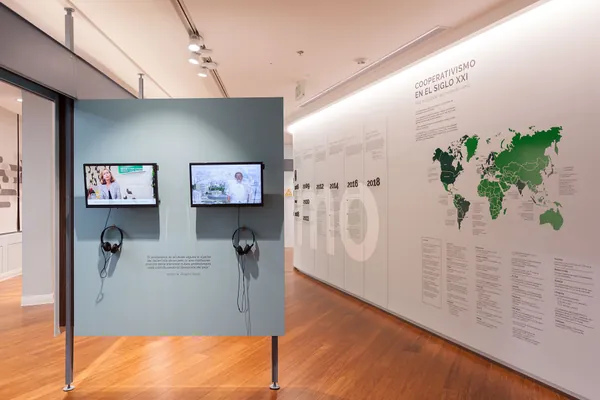
Centro del Pensamiento Coomeva
The Centro del Pensamiento Coomeva in Cali is conceived as both a physical and digital environment for preserving and interpreting cooperative memory. Its exhibition route situates Coomeva's history within the wider development of Colombian and international cooperation, using timelines, symbols, audiovisual material and thematic rooms devoted to founders, institutional evolution, enterprise structure and the role of members. The physical centre is complemented by a virtual documentation repository containing more than 2,600 items on cooperation and the solidarity economy, widening access beyond the museum space. The importance of the initiative lies in the deliberate conversion of institutional memory into a public learning resource. Rather than presenting history solely as corporate commemoration, it gathers documents and interpretation into an infrastructure for research, member education and reflection on cooperative identity. The combination of museography, digital access and documentary preservation makes the Center particularly strong in education, knowledge sharing and safeguarding. Coomeva's Center also offers a useful peace lens because museums of institutional memory can become spaces for civic education rather than corporate celebration. Its timelines and thematic rooms place principles such as democracy, solidarity and mutual aid within historical context, while the open digital repository gives researchers and the public access to a broader documentary base. Cooperative peace is built partly through the ability of members to understand the institutions they govern - their rights, history, symbols and responsibilities. By making those materials visible, the Center can strengthen informed participation and reduce the distance between large cooperative organisations and their members. Its contribution is therefore educational: a culture of peace depends on memory, transparency and the capacity to discuss institutional choices with reference to shared values and evidence.
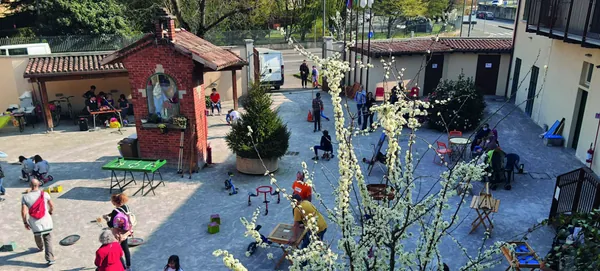
Libera Unione Mutualistica Società Cooperativa
Libera Unione Mutualistica (LUM) represents the accumulated heritage of Milanese housing cooperatives founded in working-class districts during the city's industrial expansion. Their defining choice was undivided ownership: homes were held as a common asset rather than progressively converted into individual speculative property. Over decades, mergers strengthened the capacity to maintain historic buildings, develop new affordable housing and retain a mutualist approach in a city where housing costs have become increasingly difficult for ordinary households. The tangible legacy includes residential architecture from different periods, but the deeper heritage lies in the social ecosystem built around it - member participation, community spaces, mutual investment and services that treated housing as a basis for collective well-being. LUM therefore shows how a cooperative heritage can remain materially useful. Historic buildings are not preserved as isolated relics; they continue to house people under a model intended to transfer affordability and community value from one generation to the next. LUM's undivided-ownership model gives the peace connection particular force. By keeping homes within a common patrimony, the cooperative seeks to protect affordability across generations rather than allowing the entire value of historic housing to be captured through individual sale. The model is reinforced by member participation, mutual investment and neighbourhood services. Housing insecurity can create profound social tension, especially in high-cost cities; long-term cooperative stewardship offers one way of reducing that pressure. LUM therefore demonstrates positive peace through economic architecture: rules governing property are designed to balance individual use with intergenerational responsibility. The heritage is peaceful not because residents always agree, but because conflict over a scarce urban resource is channelled through democratic governance and a shared commitment to preserve access for future members.
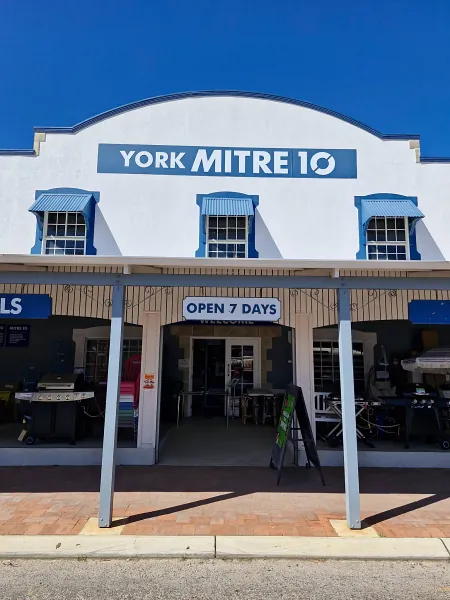
York and District Co-operative
The York and District Co-operative, established in 1917, belongs to the wave of farmer cooperation that reshaped grain marketing and retailing in Western Australia's Wheatbelt during and after the First World War. Its principal building at 138 Avon Terrace predates the cooperative: constructed in 1878 as a grocery store, it was acquired by the cooperative in 1956 and remains a prominent element of York's main street. Its Victorian Free Classical facade and continuing commercial use give the site both architectural and institutional significance. The cooperative has persisted while many of the larger agricultural organisations that shaped the period later demutualised, creating a rare continuity between historic producer/consumer cooperation and present operation. Heritage protection and ongoing use preserve the building without stripping it of function. The site therefore offers a strong example of a cooperative landmark whose meaning is reinforced, rather than diminished, by continued service to its members and town. York's cooperative survived transformations that saw many larger Australian agricultural cooperatives demutualise. That continuity gives the building a peace relevance rooted in rural economic stability. Farmer and consumer cooperatives historically gave dispersed producers and households a way to aggregate demand, market produce and maintain local services without surrendering all bargaining power to distant firms. In a small town, such institutions also create durable meeting points between economic and civic life. The York building remains significant because it is still used, making cooperation visible as an ordinary part of community infrastructure. Its contribution to peace is therefore local: strengthening interdependence, giving members a shared economic institution and helping maintain services that support the viability and cohesion of the town.
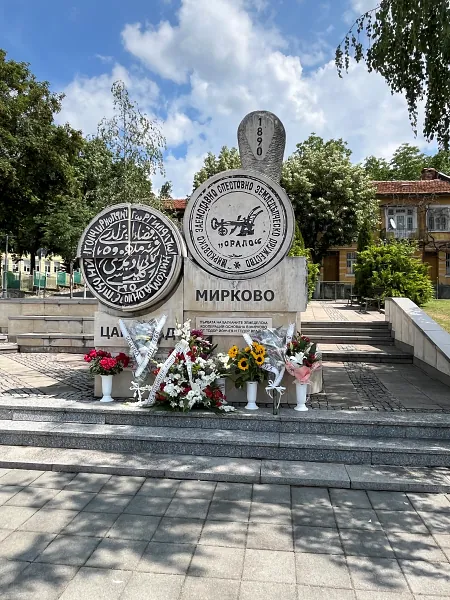
Monument of the First Bulgarian Cooperative "Oralo"
The Monument of the First Bulgarian Cooperative 'Oralo' in Mirkovo marks the establishment on 26 October 1890 of an organisation regarded within the Bulgarian cooperative movement as its foundational cooperative. The initiative is associated particularly with Todor Yonchev and Todor Vlaykov and with the transmission of European cooperative ideas into a Bulgarian rural context. Inaugurated in 2011, the monument was designed by architect Zdravetz Haytov and sculptor Alexander Haytov. Its heritage value is therefore commemorative rather than archaeological: a contemporary public work materialises the memory of a nineteenth-century institutional beginning. Annual observances, educational activities and engagement by the Central Cooperative Union, regional organisations, local authorities and residents keep the monument connected to cooperative practice rather than leaving it as an isolated memorial. The site gives visible form to a foundational story that would otherwise survive principally through documentary and institutional memory. The story commemorated at Mirkovo is one of rural communities adapting cooperative principles to local economic need at the end of the nineteenth century. The monument's continuing use for commemorations and education means that the event is transmitted as a public civic memory rather than confined to specialist history. Its peace relevance lies in the values made visible: mutual assistance, democratic participation and self-help create alternatives to social relations based solely on dependence or unequal bargaining power. Public monuments can oversimplify history, so interpretation should remain factual; however, when accompanied by education and community participation, this site can legitimately present cooperation as a peaceful method of organising economic interests and strengthening rural solidarity.
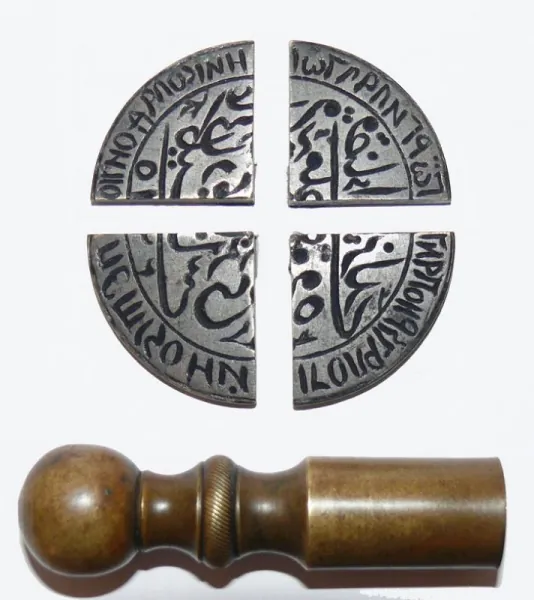
Mirkovo Vakif Seal
The Mirkovo Vakif Seal, preserved in Bulgaria's National Cooperative Museum, is a small artefact with an unusually powerful institutional logic. The seal bears Arabic characters and is constructed from five interdependent parts: four pieces form the circular seal and a handle joins them. According to the nomination, each participant held a corresponding part, so the seal could be used only when the group came together and agreed. Its significance to cooperative heritage lies precisely in this material requirement for collective presence. Authority was not embodied in one individual's possession; the object functioned only through assembly and consent. Preserved, documented and interpreted by the National Cooperative Museum and the Central Cooperative Union, the seal connects older traditions of communal responsibility in Mirkovo with later cooperative values of trust, participation and shared accountability. It is an exceptional example of an object whose physical design itself communicates a principle of collective governance. The seal's mechanism offers perhaps the most concise material metaphor for peaceful governance in the entire register. No holder could exercise the authority represented by the seal alone; effective action required the parts to be brought together. Whether read historically or symbolically, that structure places consent and interdependence at the centre of legitimate decision-making. In relation to peace, the lesson is not that consensus is always easy, but that authority can be designed so that unilateral action is impossible. Museums often explain governance through texts and constitutions; the Mirkovo seal does so through an object that physically requires cooperation. Its preservation therefore allows visitors to encounter a tangible principle of peace: shared power obliges participants to meet, communicate and reach sufficient agreement to act.
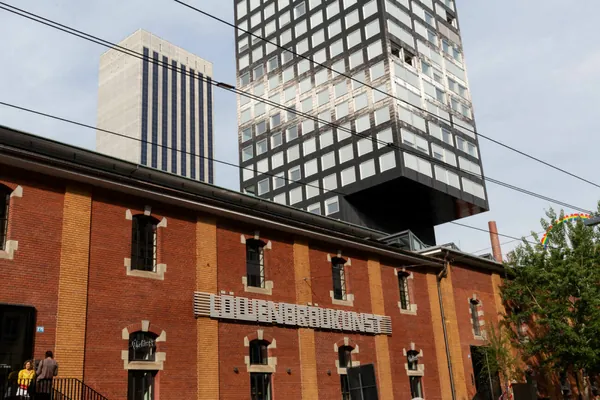
Migros Museum für Gegenwartskunst
The Migros Museum für Gegenwartskunst in Zurich is a cultural institution whose origins are inseparable from the social and cultural commitments of the Migros cooperative movement. Migros founder Gottlieb Duttweiler began acquiring art in the mid-1950s; the collection later developed beyond its original role in supporting Swiss artists, and the museum opened in 1996. Its institutional context is equally important. Migros became a cooperative in 1941, and in 1957 the commitment to devote a defined share of turnover to cultural and social purposes was embedded in the organisation's statutes through the Migros Culture Percentage. The museum is one expression of that long-term policy. Its relevance therefore lies less in depicting cooperative history than in demonstrating how a cooperative can institutionalise cultural responsibility as a continuing obligation. Collection, exhibition, mediation and broad public engagement translate a cooperative founder's civic philosophy into an enduring cultural infrastructure. The museum is a Migros Culture Percentage institution supported through the Federation of Migros Cooperatives, whose statutory cultural commitment dates to 1957. That long-term financing model demonstrates how a cooperative can make access to culture part of its social purpose; since 2023 the museum has offered free admission. The peace relevance is unusually visible in its current programme. In 2026 the museum centres its programme on solidarity and explicitly explores how understanding can bridge social, cultural and linguistic divides and how art can cultivate togetherness. The museum therefore provides a contemporary example of cooperative resources being used to create spaces for encounter, critical reflection and dialogue across difference - cultural practices that are central to positive peace.
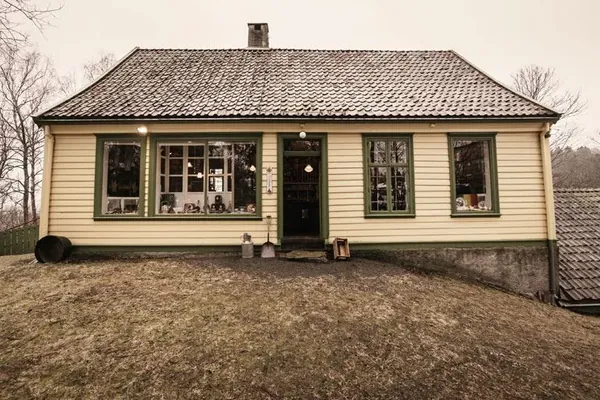
The Cooperative Museum
Reconstructed Arne cooperative store Norway's Cooperative Museum preserves the reconstructed store of Arne Forbrugsforening, one of the country's earliest durable consumer cooperatives. The association was founded in 1867 by factory owners and textile workers at Arne outside Bergen, and a purpose-built shop with bakery followed in 1872. After later commercial relocation, the old building was eventually dismantled, carefully recorded and reconstructed at Gjettum in Bærum, where the museum opened in 1980. Its interiors, goods and fittings recreate the environment of a traditional cooperative store and provide a concrete point of access to the history of consumer cooperation in Norway. The site's heritage value rests on this act of preservation through relocation: rather than allowing a redundant commercial building to disappear, the cooperative movement transformed it into an educational object. Visitors can encounter not only retail history, but the member-oriented economic practices and community role that distinguished the cooperative shop. The reconstructed store also helps interpret the everyday peace-building potential of consumer cooperation. Nineteenth-century cooperative shops were practical institutions through which households pooled purchasing power, created rules for fair trading and built local organisations around recurring economic needs. The Arne store allows visitors to encounter that history through a recognisable social space rather than only through statutes or balance sheets. Its relevance to peace is modest but meaningful: fair access to basic goods, member accountability and community self-provision can reduce economic dependency and create habits of trust. Reconstruction has therefore preserved not merely a commercial interior, but a setting in which cooperation was practised through ordinary transactions and repeated relationships among members.