
List of Cooperative Cultural Heritages
Explore the cooperative traditions, practices, and knowledge recognized worldwide
Physical places, buildings, settlements, and infrastructure that embody the history and legacy of cooperative enterprise. These include cooperative stores, factories, housing complexes, agricultural facilities, and landscapes directly associated with cooperative activity. Tangible CCH represents the material foundations of cooperation, visible in the built environment and cultural landscapes shaped by cooperative governance.
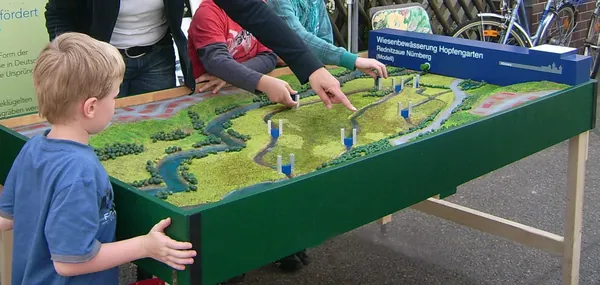

Traditional irrigation: knowledge, technique and organization
Traditional irrigation is a living body of knowledge, technique and social organisation built around the gravity-fed distribution of water through channels and ditches. Practitioners read landscape, water flow, weather and seasonal conditions; they choose watering periods, divert flows manually and maintain physical structures whose functioning depends on coordinated labour. The beginning or end of the watering season is often accompanied by social gatherings and local customs that reinforce the system’s place in community identity. The official inscription text explicitly describes the institutional role of cooperation. It states that traditional irrigation requires close cooperation between farmers and landowners responsible for water distribution and the people who maintain the infrastructure, including water cooperatives and local authorities. It further notes that cooperatives and associations, alongside scholars and institutions, play an important role in transmitting the knowledge to younger generations. This language is especially important for cooperative cultural heritage because it locates cooperation inside the functioning and transmission of the practice itself. The heritage therefore resides in more than channels. It lies in the rules, labour, trust and organisations through which users govern interdependence. No single farmer can maintain the whole system or secure a reliable flow without others observing shared arrangements. Traditional irrigation is consequently a powerful example of common-resource governance: scarcity is managed through predictable duties and collective stewardship rather than unilateral appropriation. These arrangements also have a peace dimension. By making access, maintenance and responsibility legible to all participants, the system creates institutions through which competing needs can be negotiated and water can remain a shared resource rather than a recurring source of conflict.
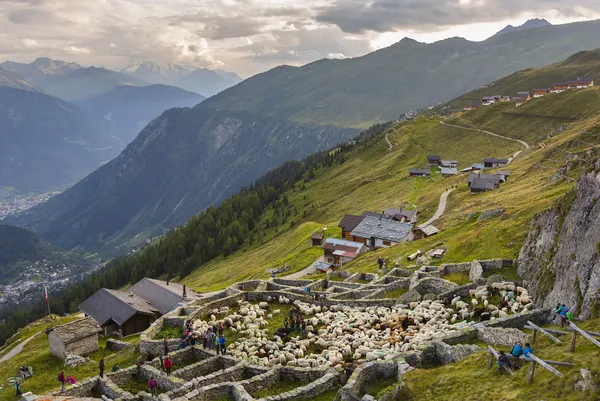
Alpine pasture season
Switzerland’s alpine pasture season is the annual movement of cattle, sheep and goats to high-altitude pastures, together with the knowledge, skills and social practices required to maintain that seasonal economy. Alpine farmers care for animals, repair fences and buildings, manage pastures, process milk into cheese and other products, and welcome visitors. The practice has also generated rituals, festivities, specialist clothing and local forms of social exchange. The official inscription text explicitly identifies alpine societies and cooperatives as bearers and transmitters of this knowledge. It states that farming and cheesemaking skills are often passed on informally within families and seasonal workforces, but also among members of alpine societies and cooperatives. The inscription decision likewise includes cooperatives among the communities and organisations that sustain the element and notes their role in education and transmission. The cooperative connection is therefore not an analogy imposed from outside; it is part of the institutional ecology of the practice. This matters because alpine grazing is inherently interdependent. Access to high pastures, maintenance of routes and buildings, animal care, milk processing and landscape management all require rules and reciprocal obligations that extend beyond a single household. Cooperative and associative structures help organise those responsibilities and keep knowledge connected to viable livelihoods. The alpine pasture season thus demonstrates how collective organisation can sustain fragile mountain environments and intergenerational continuity at the same time. The element’s relevance to peace is found in everyday reciprocity: shared resource use works only when participants accept legitimate rules, respect one another’s obligations and preserve a social relationship strong enough to manage common landscapes together.
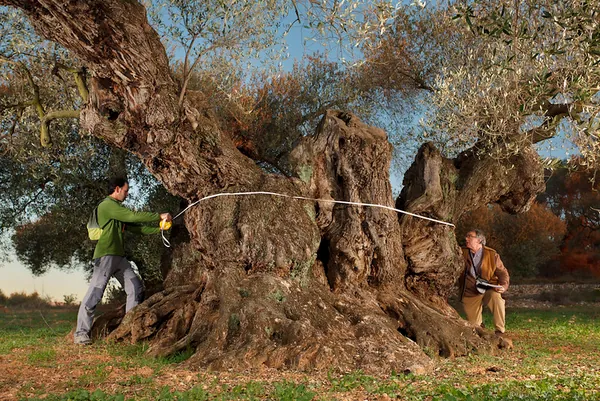
Territorio Sénia ancient olive trees
The Agricultural System Ancient Olive Trees Territorio Sénia spans a cross-regional landscape of eastern Spain characterised by an exceptional concentration of ancient olive trees, locally adapted varieties and inherited knowledge of pruning, grafting, harvesting and oil production. The system links productive agriculture with landscape stewardship, gastronomy, rural identity and the recovery of trees that might otherwise be abandoned. The official agricultural-heritage record identifies cooperation as a defining institutional feature. It describes a strong tradition of partnership through cooperatives that mill the olives of hundreds of members. It also highlights collaboration between different cooperatives and olive-oil producers which, although they compete commercially, work together to safeguard the ancient-olive-tree project, operate the Aceite Farga Milenaria guarantee mark and follow common regulations and good practices. This is a particularly clear example of cooperation functioning as a heritage-safeguarding infrastructure. The cultural value of Territorio Sénia therefore lies not only in the age of the trees. It lies in the capacity of farmers, mills, municipalities, associations, restaurants, tourism actors and local communities to coordinate around a landscape whose value exceeds any single property. Cooperative milling provides an economic basis for continued cultivation, while inter-cooperative collaboration makes shared standards and collective branding possible. The heritage is thus simultaneously biological, cultural and institutional: ancient trees remain alive and productive because a network of people continues to organise their care and use. The system demonstrates how cooperation can preserve diversity in ownership while creating the scale required to protect landscape, knowledge and rural livelihoods over generations.

Culture of Jeju Haenyeo (women divers)
The culture of Jeju Haenyeo centres on women free-divers who harvest marine products without breathing equipment and whose knowledge of tides, weather, marine ecology, diving safety and seasonal conditions is transmitted across generations. Divers are organised by levels of experience, with senior practitioners guiding others, and the practice forms a major part of Jeju’s cultural identity. It has also contributed to the advancement of women’s social status and is associated with environmentally attentive harvesting practices. The official inscription record places cooperatives squarely within the heritage system. It states that knowledge is transmitted through families, schools, haenyeo associations, the Haenyeo School, the Haenyeo Museum and local fishery cooperatives that hold the area’s fishing rights. The inscription decision goes further: representatives of the diving cooperatives were identified as participants in safeguarding, and the chairs of all village fishery cooperatives in Jeju Province gave their consent to the nomination. Cooperative institutions therefore help connect cultural transmission with access to the marine resource on which the practice depends. This is a particularly strong example of cooperative cultural heritage because the cooperative dimension is not merely commercial. Fishery cooperatives participate in the governance of fishing rights, while haenyeo communities transmit practical knowledge and uphold shared norms around resource use. The result is a heritage system in which livelihood, gendered knowledge, ecological stewardship and collective management are inseparable. Its continuity depends on maintaining both embodied expertise and institutions capable of governing the sea as a shared and finite resource. In that sense, cooperation helps sustain not only an occupation but a social order built around mutual dependence, responsibility and respect for ecological limits.
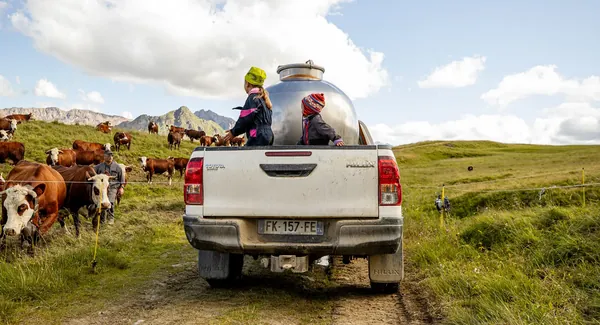
Coopérative Laitière du Beaufortain
The Coopérative Laitière du Beaufortain grew from a farmer-led project begun in 1957 and opened in 1961, at a moment when mountain dairy producers needed collective means to sustain local production and retain value in the Beaufortain valley. The cooperative helped consolidate milk collection, cheesemaking and maturation around Beaufort, whose Appellation d'Origine Contrôlée was recognised in 1968. Its heritage is carried through a chain of living practices: alpine dairying, twice-daily milk collection, transformation, ageing, quality control and member governance. Public interpretation has also been part of the cooperative's identity for decades, with visitor facilities, films, cellar tours and educational activities explaining the relationship between farms, landscape and cheese. The element is therefore both economic and cultural. Collective processing enables dispersed mountain producers to maintain a demanding local product while transmitting technical knowledge and preserving a pastoral landscape whose viability depends on continued farming. The cooperative was created in response to a rural crisis marked by falling production, industrialisation and out-migration. By pooling milk and organising year-round production, farmers strengthened the economic viability of high-mountain agriculture while maintaining a demanding regional product. Today the cooperative is owned and governed by its producers and links farming, landscape, cheese-making and direct public education. The peace relevance lies in solidarity across dispersed mountain communities. Collective processing enables small producers to remain economically present in a harsh environment, reducing the isolation and competitive fragmentation that can hollow out rural areas. The cooperative also demonstrates that shared economic institutions can bridge local rivalries by creating a common interest in quality, landscape and continuity. Here peace is territorial: maintaining a viable community through interdependence.
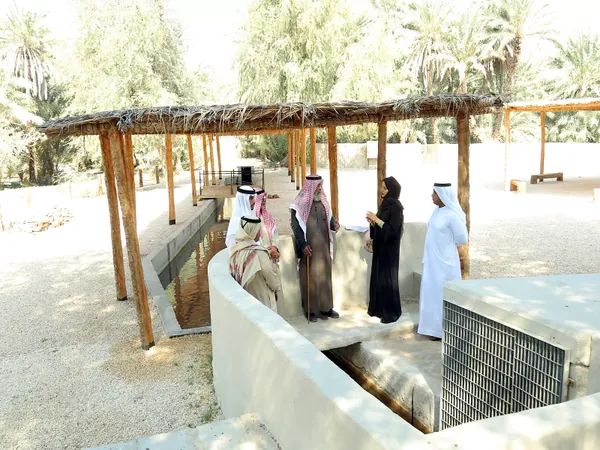
Al Aflaj traditional irrigation network system
Al Aflaj in the United Arab Emirates is a traditional irrigation network in which underground tunnels and surface channels convey water by gravity from source areas to settlements and farms. The heritage includes oral traditions, knowledge of locating water, construction and maintenance skills, and rules for equitable distribution. Community members participate in clearing tunnels and maintaining the system, and knowledge has been transmitted through instruction and shared experience for generations. The official UNESCO inscription decision describes the social principle of the system with unusual clarity. It states that communal water use and equitable distribution are based on communal endeavour, agreement, cooperation and mutual respect, and that these practices promote cohesion within local communities. The record also identifies an Al Aflaj committee made up of experienced senior community members. An earlier examination of the element stressed that the system could promote dialogue about water distribution, including the need for cooperation and dispute resolution in difficult climatic conditions. This makes Al Aflaj one of the strongest examples in the CCH register of cooperation embedded in resource governance rather than in a modern enterprise form. The irrigation network functions only because users accept shared obligations: water must be distributed according to agreed rules, channels must be maintained collectively and knowledge must remain transmissible. Al-Aflaj’s heritage value is therefore simultaneously technical and institutional. In an arid environment, equitable allocation is also a form of peace infrastructure. By turning scarcity into a governed common resource, Al Aflaj provides a living example of how cooperation, mutual respect and locally legitimate institutions can reduce conflict and sustain community life over long periods.

Cocoa Agroforestry System
São Tomé and Príncipe’s cocoa agroforestry system carries a complex historical inheritance. Cocoa production was established within a colonial plantation economy marked by enslavement, coercive labour and profound inequality. The contemporary agroforestry landscape, however, is increasingly characterised by smallholder production, diversified shade systems and efforts to place greater value and decision-making power in the hands of farming communities. The system combines cocoa - including the locally important Amelonado genetic resource - with bananas, breadfruit, taro, fruit trees, medicinal plants and shade trees arranged in several vegetation layers. This structure resembles a forest more closely than a monoculture plantation. It supports biodiversity, protects soil and water, diversifies household food and income, and gives farmers greater resilience to price and climate shocks. The agricultural knowledge embedded in the system concerns not only cocoa cultivation but also the management of shade, soils, associated crops and ecological relationships. Its cooperative relevance is unusually strong because the recent history of the sector includes a movement toward cooperativism and fairer trading relationships. Collective organisation enables farmers to aggregate production, improve quality, gain market access and retain a greater share of value. The heritage significance therefore lies partly in a social transformation: a crop once inseparable from domination is being reworked through institutions intended to support farmer agency, social equity and community continuity. COOPERATION AND PEACE This is one of the clearest entries in which heritage and peace intersect through historical repair. Cooperative organisation cannot erase the violence of the plantation past, but it can redistribute voice, income and bargaining power. By strengthening farmer autonomy and social cohesion, the contemporary system contributes to positive peace: addressing structural inequality and replacing extractive relationships with forms of participation, mutual support and more equitable exchange. Photos credit: ©FAO/Ody Mpouo
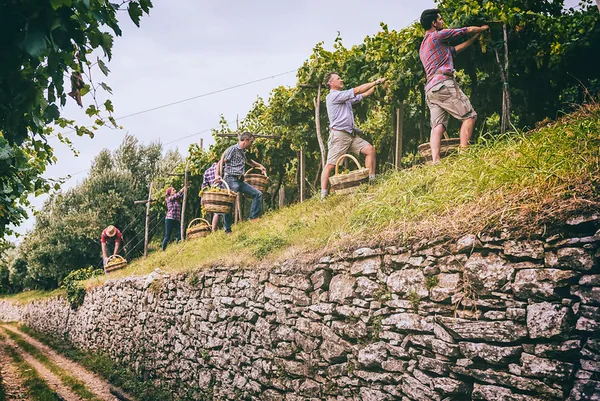
Soave Traditional Vineyards
The vineyard landscape of Soave in the Veneto is the result of a long interaction between small-scale cultivation, specialised vine-training knowledge and forms of economic coordination that enable family holdings to remain viable. Its most recognisable feature is the Pergola Veronese, a traditional training system adapted to local topography and climate. Because the system is labour-intensive and not readily suited to intensive mechanisation, its survival depends on skills, care and continuity across generations rather than on scale alone. What gives Soave particular relevance to cooperative cultural heritage is the way a fragmented agricultural landscape has remained economically coherent. Small estates can participate in a wider production system because growers, processors, consortia and other local actors organise quality, knowledge and market access collectively. The heritage therefore lies not only in vines and terraces but also in the relationships that prevent small producers from being displaced by the logic of concentration. The vineyard becomes a cultural landscape in which economic security, local identity and stewardship reinforce one another. For ICA, Soave is a useful illustration of how cooperation can protect diversity in ownership while maintaining collective standards. It shows that heritage is not necessarily preserved by freezing production in time: it can survive because communities organise institutions capable of combining inherited practice with innovation. COOPERATION AND PEACE Its contribution to peace is best understood through rural stability and shared prosperity. Where many small producers depend on the same landscape, cooperation reduces incentives for destructive competition, spreads risk and helps communities negotiate common standards. Such arrangements strengthen trust, reduce economic exclusion and preserve the social fabric of rural places - conditions associated with positive peace even where there is no direct conflict-resolution mandate. Photo credit: ©FAO/ Consorzio Tutela Vini Soave e Recioto di Soave

Qanat Irrigation Systems
Qanats are underground water channels that intercept aquifers and convey water by gravity from higher ground to settlements and agricultural land. In the Kashan region, the technique has sustained farming and habitation in an exceptionally dry environment for centuries. Its technical elegance is inseparable from a social system: shafts and tunnels must be constructed and maintained, water must be allocated over time, and users must respect arrangements designed to protect a resource that no household can secure alone. The cooperative significance of qanat heritage lies in these community institutions of distribution and maintenance. Local arrangements determine who receives water, for how long and in what sequence; specialist knowledge is needed to inspect and repair underground channels; and agricultural choices must be calibrated to the volume and timing of available water. The system therefore converts scarcity into an organised commons rather than leaving access to individual appropriation. For cooperative heritage, the qanat offers a powerful example of collective governance preceding modern cooperative law. It should not be described as a cooperative enterprise unless a particular local institution has that legal form. Its relevance is instead institutional and cultural: communities created durable rules of mutual dependence, shared labour and accountability around a vital resource. The continued functioning of qanats demonstrates how traditional ecological knowledge and social organisation can operate as a single heritage system. COOPERATION AND PEACE The peace dimension is direct at the level of resource governance. Water scarcity can generate conflict; qanat systems respond by making allocation predictable, collectively understood and socially enforceable. Their customary institutions show how communities can reduce disputes through rules, reciprocity and shared maintenance. In this sense, the heritage is not simply hydraulic engineering but a long practice of preventing conflict around a scarce common resource. Photo courtesy of GIAHS Qanat Irrigated Agricultural Heritage Systems, Kashan.
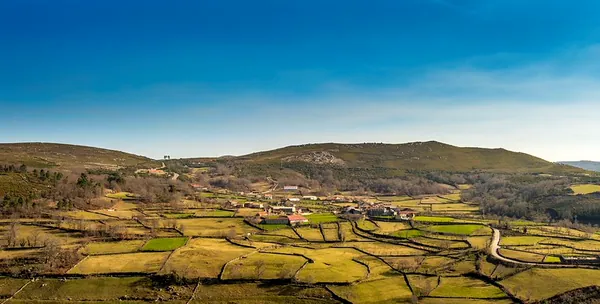
Barroso Agro-Sylvo-Pastoral System
Barroso, in northern Portugal, is a mountainous agricultural territory shaped by livestock, rye and potato cultivation, forests, meadows and extensive grazing. Its cultural landscape reflects a long relationship between households and communal resources. Permanent pastures, rough grazing areas and village-based practices have allowed communities to combine animal husbandry with agriculture and forestry in conditions where intensive farming would be poorly suited to the terrain. The heritage significance lies as much in social organisation as in land use. Pastoral systems require routes, seasonal understandings, shared access and rules governing resources that cannot be managed efficiently as isolated fragments. Traditional knowledge concerns animal breeds, soils, fodder, water, weather and the timing of agricultural operations. The resulting landscape is therefore a record of accumulated community decisions rather than a purely natural scene. For cooperative cultural heritage, Barroso is relevant as a landscape of mutual dependence. Common-resource management, collective labour traditions and local associations help retain population and knowledge in a region facing the pressures of demographic change and agricultural consolidation. The lesson is not that every historic commons is a cooperative in the legal sense, but that cooperative institutions often grow from the same social capacities: trust, reciprocity, locally legitimate rules and a willingness to subordinate immediate individual gain to the long-term viability of a shared territory. COOPERATION AND PEACE Barroso’s peace relevance is grounded in the governance of land and livelihood. Shared pastoral systems work only when neighbours accept reciprocal obligations and legitimate rules of access. These practices build social cohesion and reduce conflict over common resources. By sustaining dignified rural livelihoods and a sense of belonging, they also counter forms of exclusion and depopulation that can weaken community resilience. Photo credit: Photo courtesy of GIAHS Portugal - Barroso Agro-sylvo-pastoral System.